
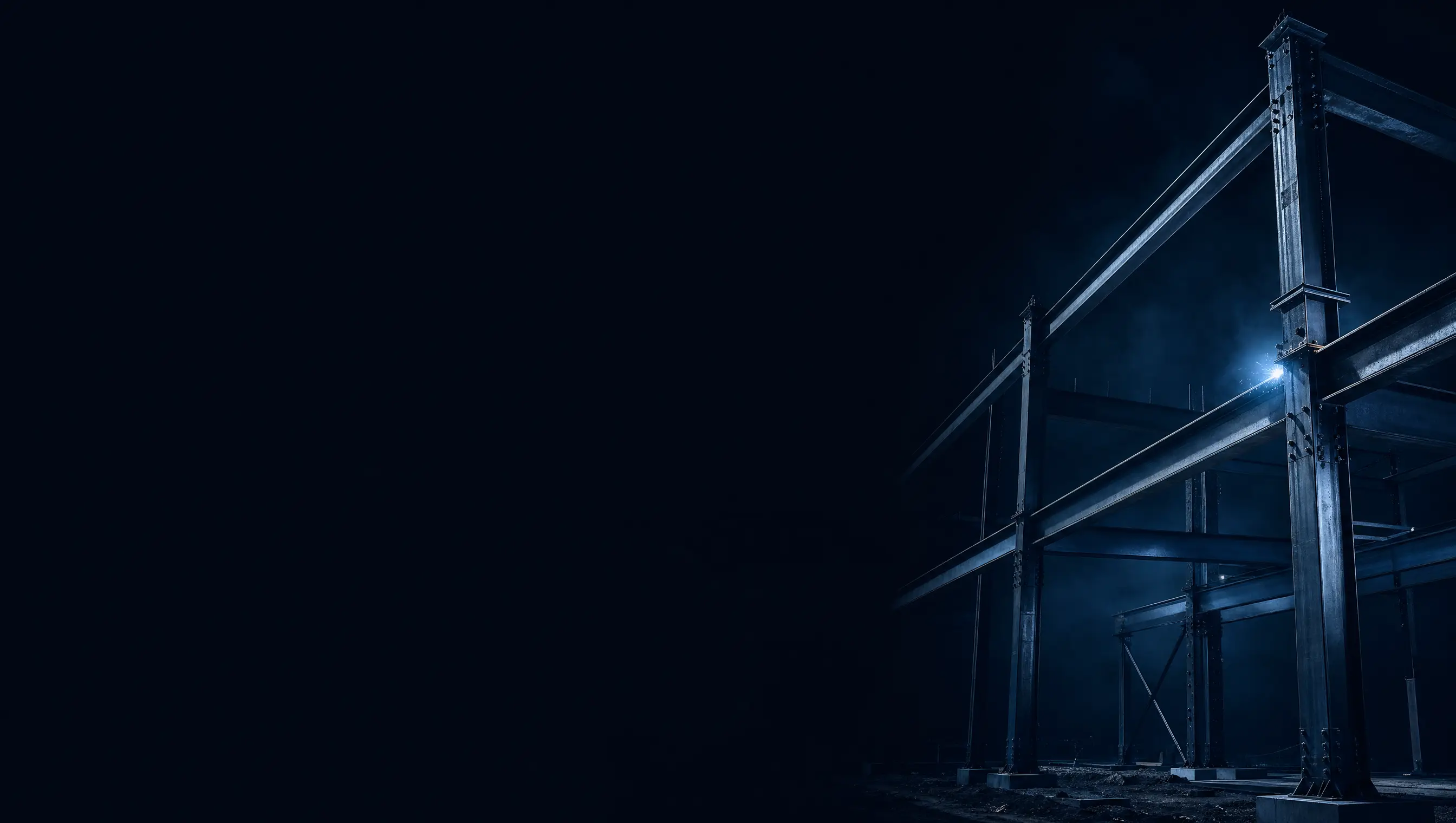
A steel-framed indoor riding arena gives you a covered, all-weather space to ride in with a completely clear floor from one wall to the other. T C Rowan designs, fabricates and erects clear-span portal-frame arenas from our own workshop on Thorpe Way Industrial Estate in Banbury, so the same team that draws your building is the team that bolts the last connection on site. For equestrian centres, riding schools and private horse owners, that single line of responsibility is what keeps a large, structurally demanding building on programme and on spec.
Why steel for an indoor riding arena
The whole point of an indoor school is an unobstructed riding surface, and that is exactly what steel does best. A steel portal frame carries the roof on clear-span rafters, so there are no internal columns standing in the working area. Nothing for a horse to shy at, nothing for a rider to misjudge, nothing breaking up the schooling line.
Steel reaches the long spans an arena needs far more efficiently than timber or masonry, and it carries the wind and snow loads on a large roof without bulking out the structure. It is strong, durable and low-maintenance, and it goes up quickly once fabrication is complete. For a building you want riding in for decades with minimal upkeep, a fabricated steel frame is the natural choice.
Our indoor arenas sit within our wider agricultural and equestrian steel building work, so the frame, cladding and detailing are designed as one package rather than bolted together from separate trades.
The clear-span advantage
Clear span is the single most important feature of a riding arena, and it is where steel earns its place. The portal frame transfers the roof load straight down the perimeter columns, leaving the entire interior open from wall to wall. That gives you the full working width with no compromise, whatever your discipline.
It also makes the building flexible. A clear floor can be marked out for dressage, set up for showjumping, or used for lunging and schooling without designing around posts. If your needs change, the space adapts, because there is nothing fixed in the middle to plan around.
Designing the arena around how you ride
The right arena is the one built around your discipline, your site and your budget, so we design rather than sell off a fixed list.
- Span and footprint. Arenas are usually built around recognised working sizes, from smaller private schools up to larger competition and training spans. We size the clear span to suit how you ride and what your land allows, rather than forcing your riding into a standard box.
- Eaves and roof height. An indoor school needs generous headroom so a rider sits well clear of the structure, with extra height for disciplines that go up. The portal frame carries the roof without internal columns, so the height is genuinely usable across the whole floor.
- Natural light and ventilation. Roof lights and translucent sheeting bring in daylight so the school does not feel like a closed box, while ridge and side ventilation keep the air moving over the surface and help control dust and condensation.
- Cladding. We specify wall and roof cladding to suit the use and the setting, balancing weather protection, insulation against drumming rain, and the finish you want the building to present.
Because we run design and build in house, those decisions are made together rather than passed between separate firms, which is what keeps the brief intact from first drawing to final erection.
A complete equestrian package
Most riding arenas do not stand alone. They sit alongside stabling, tack rooms and storage, and there is a real advantage in having one steel fabricator detail the whole site so everything ties together and matches.
We build steel framed stables and equestrian buildings to the same standard as our arenas, and the two can be designed as a single connected scheme, sharing access, drainage and a consistent look across the yard. One fabricator across the arena and the stable block means consistent steelwork, one point of responsibility and a coordinated programme.
Quality, standards and planning
T C Rowan is CE approved and fabricates to BS EN 1090 execution standards, the recognised standard for structural steelwork in the UK. Material traceability is available on request, our welding is carried out by qualified, coded welders, and we are fully insured. A building of this size is a serious structure, and the frame is designed and detailed to take its loads properly.
A building of this scale will usually need planning permission, and the rules differ between agricultural and equestrian use, so always check with your local planning authority before you commit. We design and fabricate the steel frame to suit the scheme you get approved and coordinate with your planning consultant or architect so the building matches the permission. To talk through your arena, contact us for a free, no-obligation quote.
Frequently asked questions
Why is a steel portal frame better than timber for an indoor riding arena?
A steel portal frame spans the full width of the arena with no internal posts, so there is nothing for horse or rider to ride into and nothing interrupting the working surface. Steel achieves long clear spans more efficiently than timber, copes well with the wind and snow loads on a large roof, and gives a strong, low-maintenance structure that suits the open, full-height interior a riding school needs.
What size can you build an indoor riding arena?
Arenas are usually built around recognised working sizes, with smaller schools for private use and larger spans for competition and training, but the right footprint depends on your discipline, your site and your budget. Rather than quote a fixed size, we design the clear span and eaves height around how you ride and what your land allows. Contact us with your plans for a tailored proposal.
How much headroom (eaves height) does an indoor riding arena need?
An indoor school needs generous eaves height so a rider sits well clear of the structure and jumping or schooling is safe, with extra height typically wanted for disciplines that go up. A steel portal frame is well suited to this because it carries the roof on clear-span rafters without needing internal columns. We set the eaves height around your discipline during design.
Do I need planning permission for an indoor riding arena?
Planning permission is usually required for a building of this scale, and the rules differ for agricultural versus equestrian use, so you should always check with your local planning authority before you commit. We can design and fabricate the steel frame to suit the scheme you get approved, and coordinate with your planning consultant or architect so the building matches the permission.