
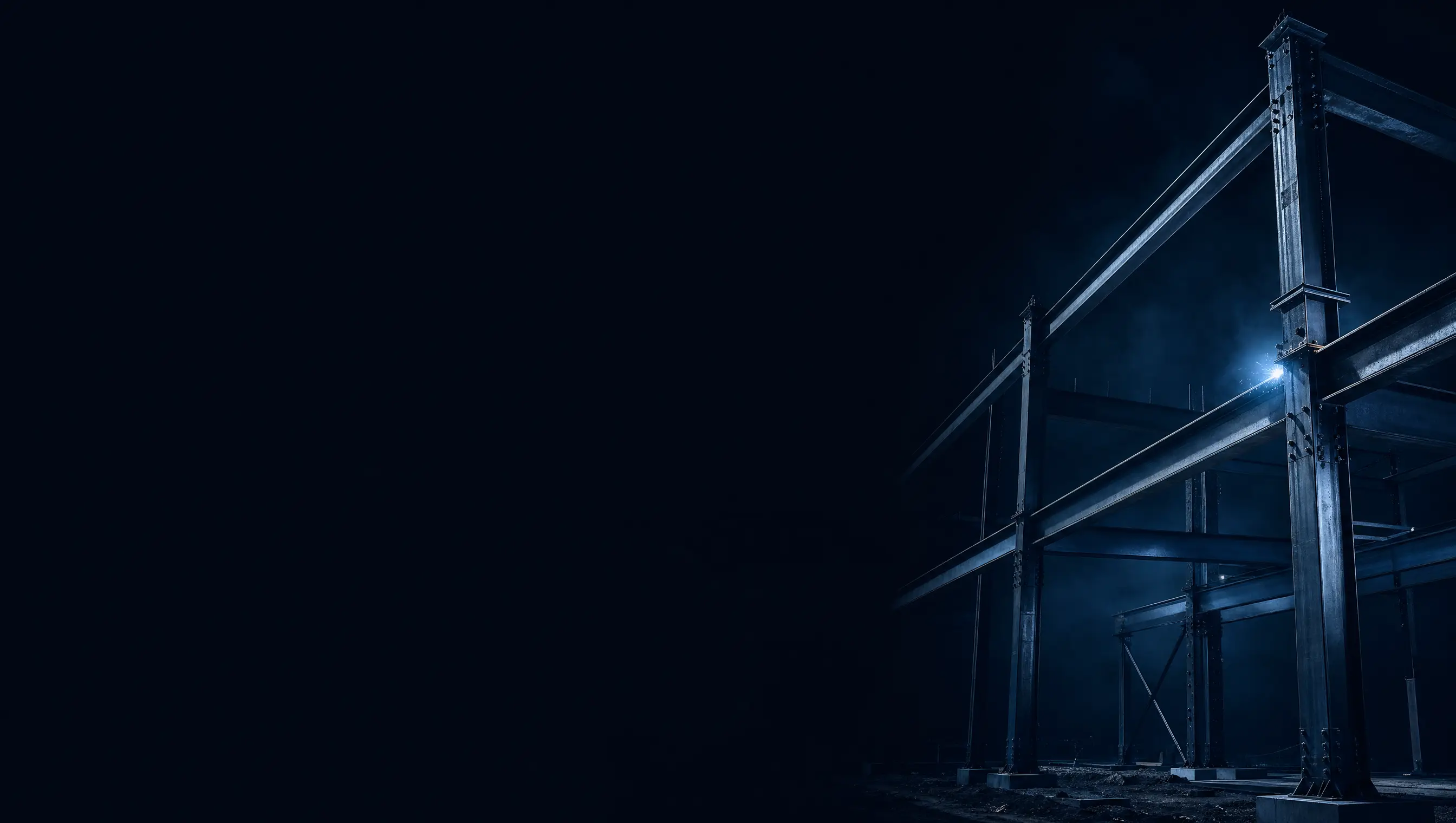
TC Rowan installs structural steelwork across Oxfordshire and, for larger projects, UK-wide, using our own erection team rather than a subcontractor. The crew that lifts and bolts your steel on site is the same company that designed and fabricated it in our Banbury workshop, so the steel that turns up fits the building it was measured for. That single-contractor chain, from drawing to final bolt, is what keeps installation on programme and removes the gaps where steel projects usually slip.
What we install
Our erection team handles the full structural package, not just isolated beams:
- Steel frames: portal frames, goalpost frames for structural openings, and braced frames for commercial, industrial and residential builds
- Beams and columns: universal beams (UB), universal columns (UC) and PFCs, including RSJ beams supplied and fitted for openings and load-bearing alterations
- Mezzanine floors: steel-framed mezzanines and the columns, beams and decking support that carry them
- Steel staircases and access steelwork: internal and external stairs, landings and walkways, set out and fixed on site
- Connections and modifications: bolted and welded connections, and alterations or strengthening of existing steel during refurbishment
Most installs combine several of these in one visit, which is why a crew that knows the whole structure (because we fabricated it) matters more than a generic erection gang.
The installation process
Every install follows the same sequence so there are no surprises on site:
- Site survey and set-out: we confirm levels, access and existing structure, often during the site survey and project management stage before fabrication begins.
- Method statement and risk assessment: a job-specific RAMS package covers lift plan, exclusion zones, sequence and access equipment before anyone is on site.
- Delivery and lifting: steel is delivered to the agreed sequence and lifted into position using the right plant for the site, from mini-cranes and genie lifts on restricted domestic jobs to larger mobile cranes on commercial frames.
- Bolt-up and alignment: connections are made and the frame is plumbed and lined before final tightening.
- Final fix and sign-off: bolted connections are torqued to specification, any site welds are completed by coded welders, and the steel is handed over ready for the following trades.
Site safety and compliance
Steel erection is high-risk work and we treat it that way. Every install runs under a job-specific method statement and risk assessment, with appropriately certified operatives and lifting equipment, and certified lifting accessories checked before use. Bolted connections are torqued to the engineer’s specification; any connection that cannot be bolted is welded on site by experienced coded welders. We apply the same BS EN 1090 execution discipline on site as we do in the workshop, and we are CE approved with material traceability available on request. We are fully insured, and a clear lift plan and exclusion zone keep other trades safe while we work.
For load-bearing work such as RSJs and structural openings, beam sizing must come from a structural engineer’s calculation, and the work needs Building Control sign-off. We install to that design and to the approved drawings, not to guesswork on site.
Why one contractor from drawing to erection reduces risk
When the fabricator and the erector are the same firm, site reality feeds back into fabrication before steel is cut. Our team flags connection clearances, access constraints and lift weights early, so the steel that arrives is the steel that goes in first time. When fabrication and erection are split between two firms, that feedback loop breaks: mismeasured openings, clashing connections and remedial site welding are almost always symptoms of the same problem, namely nobody owning the whole chain. With TC Rowan there is no finger-pointing between fabricator and erector, because they are one company.
This is the same joined-up approach behind our structural steelwork and steel fabrication services. You can see installed examples, from a full steel-frame house to commercial frames and bespoke staircases, in our project gallery.
Frequently asked questions
Do you use your own erection team or subcontract it?
We use our own in-house erection team. The same company that designs and fabricates your steel installs it, so there is one point of responsibility from drawing to final bolt and no gap between fabricator and erector.
Can you install steel on restricted-access and domestic sites?
Yes. We regularly install beams and frames on tight domestic sites using mini-cranes, genie lifts and smaller plant where a large mobile crane will not fit. The right lifting method is chosen as part of the site survey and lift plan, not assumed on the day.
What areas do you cover for steel installation?
We install across Oxfordshire, Buckinghamshire, Berkshire, Northamptonshire and Warwickshire from our Banbury base, and we take on larger structural steelwork projects UK-wide. Contact us with your location and we will confirm.
What do you need from me before installing structural steel?
We need the structural engineer’s drawings and calculations for any load-bearing steelwork, plus details of site access. For load-bearing alterations such as RSJs, beam sizing comes from the engineer and the work needs Building Control sign-off. If you do not yet have drawings, our site survey and project management service can set the project up, or just get in touch for a quote.